Machine Guarding & Operator Safety
A guard is only as good as the switch watching it
Doors get propped, interlocks get defeated, and when the line drops nobody can say which device tripped. BERNSTEIN safety switching, hinge switches hidden inside the guard, contactless SMART sensors, rope pulls and illuminated e-stops, makes the guard tamper-resistant and tells you exactly what stopped the machine.
Guarding That Survives Contact With Production
Most guarding failures are not design failures. They are the operator finding a faster way through.
Guard the Access, Not the Machine
Every door, flap, grille and hatch someone can open while the machine can still move is an access point that needs a device on it, hinge switch, contactless sensor or interlock.
Make Defeating It Harder Than Using It
Hinge switches sit inside the hinge with nothing to reach; contactless SMART sensors have no actuator to tape over. If the safe way is the fast way, the guard stays on.
Know Which Device Stopped the Line
IO-Link and NFC diagnostics report which switch, sensor or e-stop opened the circuit, so a stoppage is a two-minute reset instead of a walk down the whole machine.
What Sites Get Out of It
Fewer defeated guards, shorter stoppages, and a safety case you can show.
A Safety Case You Can Show
Devices selected against EN ISO 13849 and EN ISO 12100, documented per access point rather than assumed.
Shorter Unplanned Stoppages
Diagnostics name the device that tripped, so the fitter walks to one point instead of testing the whole guard circuit.
Controls Where the Operator Stands
Foot switches, handheld enabling devices and illuminated e-stops put the stop within reach of the work, not the panel.
Fewer Defeated Guards
Concealed and contactless switching removes the obvious workaround, which is what most incident reports come back to.
Which Device Belongs on Which Guard
The guard type and how often people go through it decide the device long before the catalogue does.
Performance level and category are set by your risk assessment, not by the device on its own. Send us the assessment and we will match switching, monitoring and reset to it.
Two Things Worth Deciding Early
Whether the guard should be invisible, and whether the safety circuit should be able to explain itself.
Two Ways to Make a Guard Tamper-Resistant
Both remove the workaround, but they suit different guards. Choosing on the guard geometry avoids retrofitting twice.
Make the Safety Circuit Explain Itself
A safety circuit that only reports open or closed turns every trip into a search. IO-Link and NFC change what a stoppage costs.
BERNSTEIN, safety switching, SMART sensors and operator stations
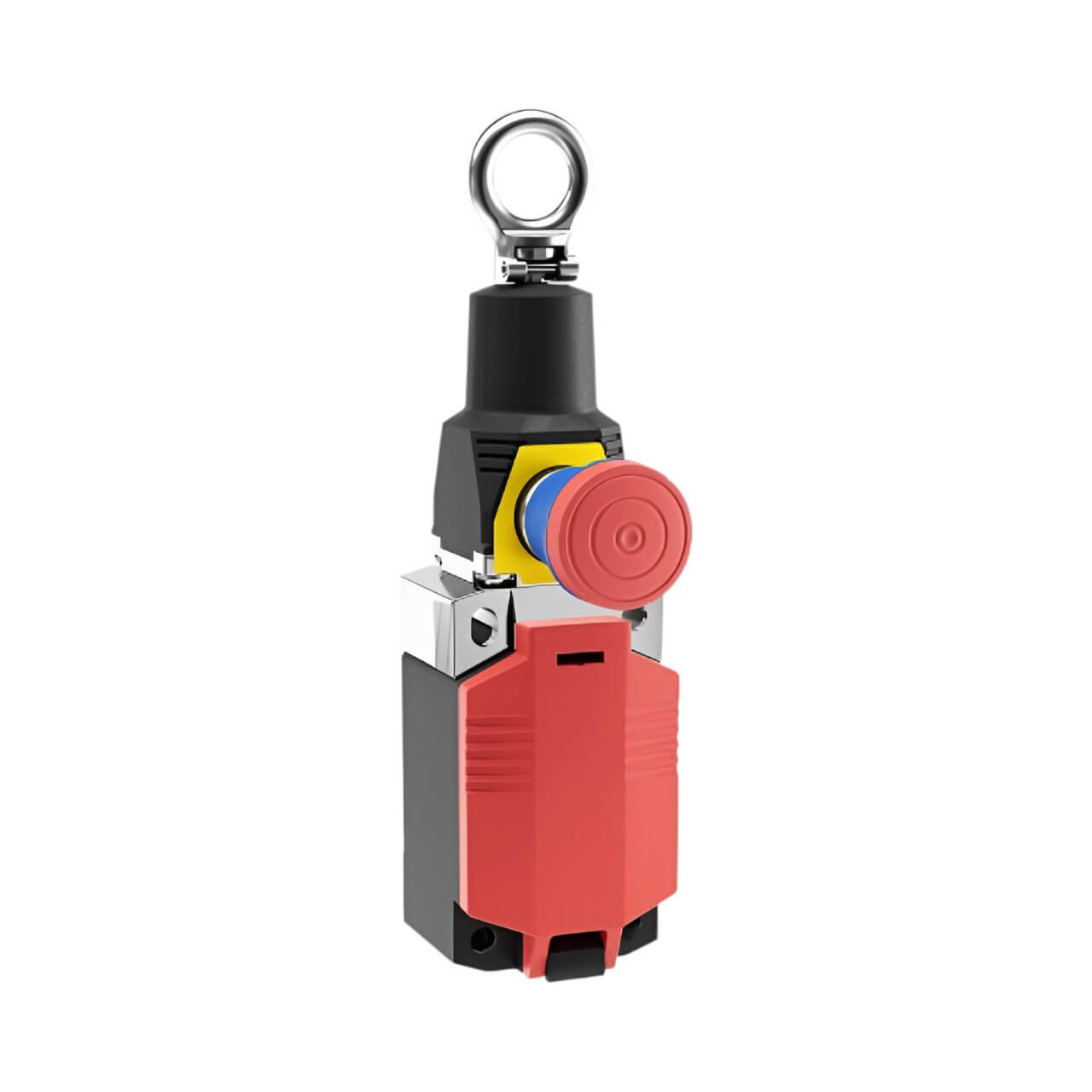
BERNSTEIN builds the devices that sit on the guard itself: SHS and SHS3 hinge switches with the safety contact inside the hinge, contactless SRF SMART Safety Sensors on doors, flaps and grilles, self-monitoring rope pulls, EN ISO 12100 foot switches, and SEU illuminated e-stops. Werma signal towers sit alongside them so the state of the machine is visible from the floor.
Where This Application Matters Most
Anywhere people and moving plant share the same floor.
Products and Brands Behind This Application
BERNSTEIN switching and sensing on the guard, Werma signalling above it, and operator stations built to the components you nominate.

Ask for a Safety Switching Review
Tell us what the machine does, where people go through it and what the risk assessment calls for. We will come back with the switching, monitoring and diagnostics to match.